

The Ultimate Guide to Sunscreen & Sun Damage: Why Daily Sun Protection is Essential for Healthy Skin in Nepal
Discover why daily sun protection is a clinical necessity in Nepal. Learn about UVA/UVB differences, signs of sun damage, and how to choose the right sunscreen from the expert dermatologists at Diva Skin City in Butwal.


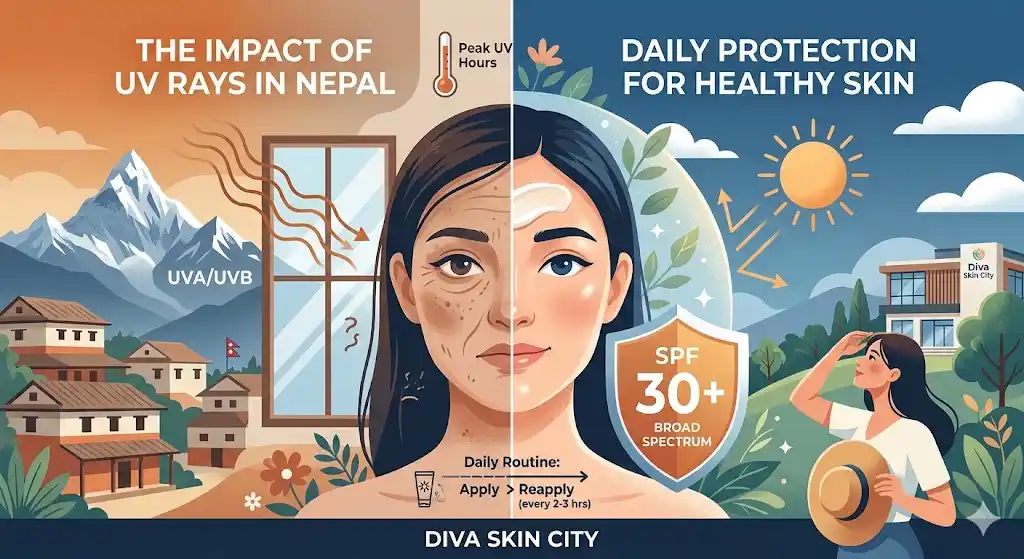
Many people in Nepal believe that sunscreen is a seasonal luxury—something to be packed only for summer trips, beach vacations, or days spent under intense, direct sunlight.
In reality, sun damage is a cumulative, year-round threat that happens every single day. Whether you are driving down the streets of Butwal, walking outdoors on a cloudy afternoon, or simply sitting near a window at work, your skin is experiencing UV exposure.
At Diva Skin City—a premium skin, hair, laser, and cosmetic clinic in Butwal—our expert dermatologists frequently treat patients dealing with completely preventable skin conditions caused by unprotected sun exposure. Daily sunscreen is one of the most effective anti-aging and skin-protective habits you can develop.
The Science of Sun Damage: UVA vs. UVB Rays
To understand why daily protection is mandatory, it helps to understand what the sun actually does to your skin cells. The sun emits ultraviolet (UV) radiation, which damages the skin over time. This radiation is divided into two primary types that affect your skin differently:
1. UVA Rays (The Aging Rays)
UVA rays have a longer wavelength, allowing them to penetrate deep into the skin. They are present with relatively equal intensity year-round and easily pass through glass windows. These rays are responsible for:
- Premature skin aging
- Wrinkles and sagging
- Collagen breakdown
- Long-term, irreversible cellular damage
2. UVB Rays (The Burning Rays)
UVB rays mainly affect the superficial surface layer of the skin. These rays fluctuate depending on the weather and season, causing:
- Sunburns and immediate tanning
- The formation and worsening of dark spots
- Pigmentation worsening
Long-Term Clinical Note: Continuous, unprotected exposure to these rays accumulates over time, significantly increasing the risk of skin cancer and chronic skin damage.
6 Signs Your Skin Already Has Sun Damage
Living in Nepal’s diverse climate—especially in regions like Butwal where UV exposure can get incredibly intense—means your skin faces a daily battle against environmental stressors. You may already be experiencing sun-related skin changes if you notice any of these signs:
- Persistent Tanning: Skin that struggles to return to its natural tone.
- Uneven Pigmentation: Patches of dark and light skin tones across the face.
- Melasma: Stubborn, symmetrical brown or grayish patches, particularly on the cheeks or forehead.
- Early Fine Lines: Wrinkles forming prematurely around the eyes and mouth.
- Rough or Dull Texture: A lack of natural radiance and a coarse skin feel.
- Darkened Acne Marks: Post-inflammatory hyperpigmentation (PIH) that becomes significantly darker and harder to fade after sun exposure.
The Top Benefits of Making Sunscreen a Daily Habit
Investing in a broad-spectrum sunscreen with an SPF of 30 or higher is the single most effective anti-aging habit you can build. Consistent use delivers profound benefits:
1. Prevents Premature Aging
Sunscreen protects your structural collagen and elastin fibers, helping to reduce the appearance of fine lines, wrinkles, and sagging skin.
2. Regulates Pigmentation & Melasma
UV light triggers the overproduction of melanin (the pigment that gives skin its color). Regular sunscreen use stops this trigger, helping control and fade melasma, sunspots, and stubborn post-acne marks.
3. Crucial Support for Medical Dermatology Treatments
If you are visiting a clinic for advanced skincare or active clinical treatments, sunscreen isn’t optional—it is a medical necessity. Sunscreen becomes significantly more important because these treatments make your skin far more sensitive to sunlight:
- Topical Retinoids
- Chemical Peels
- Laser Skin Resurfacing
- Medical Acne Treatments
- Prescription Pigmentation Creams
The Indoors Myth: Do You Need Sunscreen Inside?
Yes, you absolutely do.
As mentioned, UVA rays easily penetrate standard glass windows, meaning your skin is targeted even while you work at your desk or relax at home. Furthermore, prolonged screen exposure from laptops and smartphones, combined with reflected ambient sunlight, can exacerbate pigmentation issues in sensitive individuals.
Indoor sun protection is vital if you are actively managing:
- Melasma and hyperpigmentation
- Highly sensitive skin barriers
- Proactive anti-aging concerns
How to Choose the Best Sunscreen for Your Skin Type
A common reason people avoid sunscreen is a bad experience with a product that felt too heavy, greasy, or left a white cast. The secret is matching the formula to your specific skin type:
| Skin Type | Recommended Formula | Key Features to Look For |
|---|---|---|
| Oily / Acne-Prone | Gel-based formulas | Non-comedogenic (won’t clog pores), lightweight matte finish |
| Dry / Dehydrated | Cream-based formulas | Moisturizing ingredients like ceramides or hyaluronic acid |
| Sensitive / Reactive | Mineral / Physical formulas | Formulated with zinc oxide for gentle, highly tolerated protection |
At Diva Skin City, our dermatologists provide personalized assessments to help you select the exact sunscreen formulation that aligns with your lifestyle, budget, and treatment goals.
Dermatologist Rules for Application & Reapplication
An under-applied sunscreen is only giving you a fraction of the protection listed on the bottle. Follow these clinical application rules to ensure full coverage:
- Timing is Key: Apply your sunscreen 15 to 20 minutes before stepping outdoors so the protective layer can fully set.
- Consistency: Use it every single morning, even on cloudy or overcast days.
- The Reapplication Rule: Reapply your sunscreen every 2 to 3 hours during prolonged outdoor exposure. If you sweat heavily or spend time outdoors in Nepal’s heat, reapplication becomes even more important to keep the barrier intact.
- Don’t Skip the Grey Areas: Ensure you thoroughly coat commonly forgotten zones, including the ears, neck, hands, eyelids, and around the lips.
A Holistic Approach to Sun Protection
Sunscreen works best when it is part of a broader sun-defense strategy. For maximum protection during peak UV hours, combine your sunscreen application with these daily habits:
- Wear UV-blocking sunglasses to protect the delicate eye area.
- Utilize umbrellas or wide-brimmed hats when walking in strong sunlight.
- Seek shade and avoid direct midday exposure during peak sun hours whenever possible.
- Wear protective clothing during long outdoor activities.
Expert Dermatology Care in Butwal
If you are already noticing signs of sun damage, such as dark patches, stubborn melasma, or premature wrinkles, home remedies alone may not be enough.
Diva Skin City is Butwal’s leading dedicated dermatology and cosmetic clinic. Our medical team offers comprehensive, advanced treatments tailored specifically to your unique skin type and the local climate demands of Nepal. Our core specialties include:
- Targeted Pigmentation & Melasma Therapy
- Acne & Acne Scar Management
- Advanced Medical Laser Treatments
- Clinical Anti-Aging & Skin Rejuvenation Procedures
- Hair Loss Solutions
Healthy skin is protected skin. Sunscreen is far more than a cosmetic choice—it is a fundamental preventative healthcare tool. Make sun protection a non-negotiable daily habit, not just a seasonal routine.
Frequently Asked Questions (FAQs)
What SPF rating is best for daily use in Nepal?
Dermatologists generally recommend using a broad-spectrum sunscreen with an SPF of 30 or higher for reliable, everyday protection against both UVA and UVB rays.
Can sunscreen completely prevent tanning?
While no product blocks 100% of UV rays, regular and proper application of a high-quality sunscreen will significantly reduce tanning and prevent UV-induced pigmentation from worsening.
Do I really need to wear sunscreen on cloudy or winter days?
Yes. UV rays are invisible and remain present during cloudy, overcast, or cooler winter days. A massive portion of UV radiation can penetrate cloud cover, meaning your skin is still vulnerable to long-term damage.
How often do I actually need to reapply sunscreen?
For standard outdoor exposure, you should reapply every 2 to 3 hours. If you are washing your face, performing heavy physical activities, or sweating heavily in the local heat, reapply immediately afterward.
Is sunscreen safe to use if I have oily, acne-prone skin?
Absolutely. Individuals with oily skin should avoid heavy creams and instead choose gel-based, lightweight, and non-comedogenic sunscreens that protect the skin without clogging pores or causing breakouts.
📅 Take the First Step Toward Healthy, Confident Skin
Your skin and hair deserve expert medical care, not experimental guesswork. Schedule your professional skin analysis with our specialist dermatologists today.